
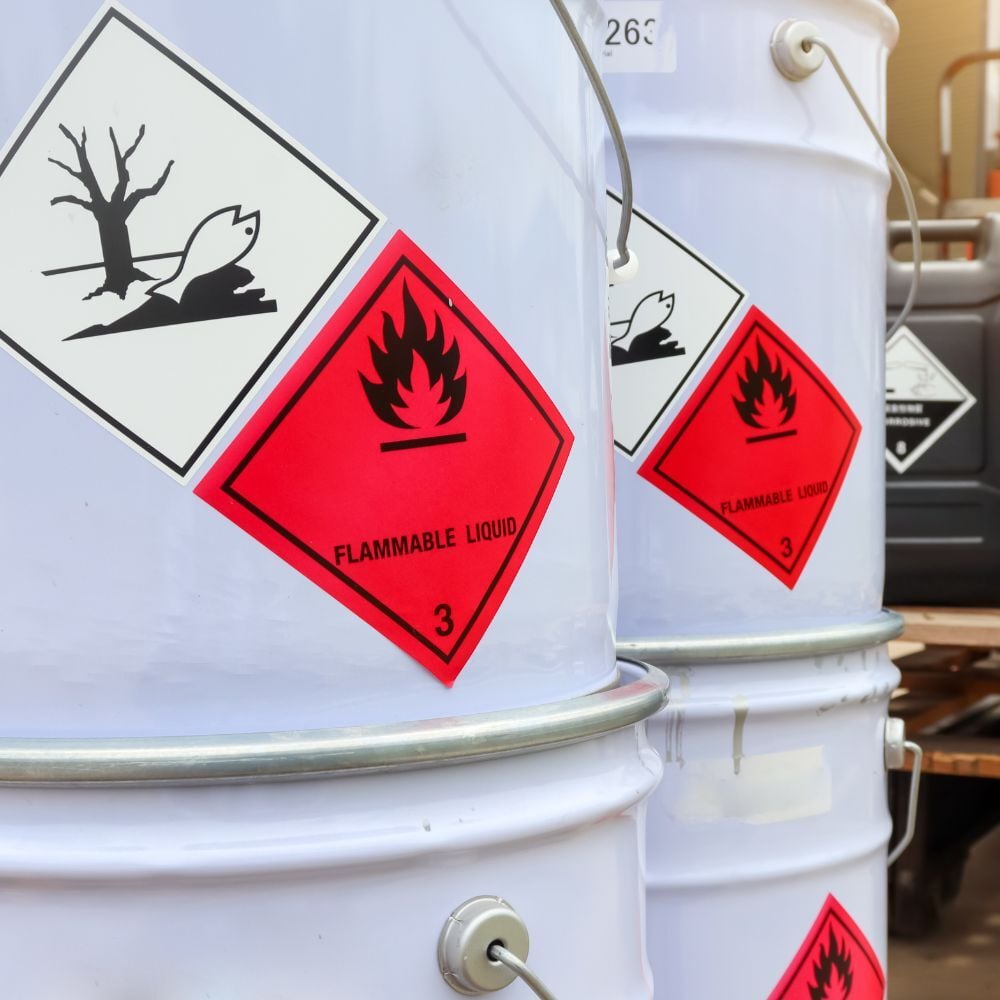
Flammable liquids are among the most dangerous types of hazardous waste. They require meticulous attention to detail during storage and disposal.
However, many businesses inadvertently put their employees, facilities, and the environment at risk by making common mistakes. Understanding these pitfalls and how to avoid them is crucial for ensuring the safety of your employees and the compliance of your organization.
Common Mistake #1: Using Improper Storage Containers
One of the most frequent errors is storing flammable liquids in containers that are not designed for hazardous materials. Non-compliant containers may not be able to withstand leaks, spills or pressure changes, increasing the risk of accidents.
How to Avoid:
- Use containers approved by the Department of Transportation (DOT) or Occupational Safety and Health Administration (OSHA).
- Ensure containers are made from materials compatible with the liquid being stored.
Common Mistake #2: Neglecting Labeling Requirements
Failure to properly label containers leads to confusion and increases the likelihood of improper handling. Unlabeled containers can result in dangerous chemical reactions if mixed with incompatible substances.
How to Avoid:
- Clearly label all containers with the name of the chemical, hazard warnings, and handling instructions.
- Use labels that comply with OSHA’s Hazard Communication Standard (HCS) or the Globally Harmonized System (GHS).
Common Mistake #3: Overfilling Containers
Overfilled containers leave little room for liquid expansion, particularly in varying temperatures, potentially causing leaks or ruptures. Employees may have a lack of awareness about proper fill levels, or this may happen due to a simple mistake by misjudging the liquid’s expansion properties.
How to Avoid:
- Follow manufacturer guidelines for maximum fill levels.
- Leave at least 10% headspace in containers to accommodate expansion.
Secondary Containment Requirements
Another important requirement when storing flammable liquids is the use of proper secondary containment. Secondary containment systems are designed to capture leaks or spills if the primary container fails, preventing hazardous liquids from spreading across floors, reaching drains or creating fire hazards. Many facilities overlook this requirement, assuming sealed containers alone are sufficient. However, EPA hazardous waste regulations and many local fire codes require secondary containment when storing flammable or hazardous liquids. Common solutions include spill containment pallets, containment berms, or diked storage areas that can hold the contents of the largest container in the storage area. Implementing proper secondary containment helps facilities control accidental releases, simplifies cleanup and significantly reduces the risk of regulatory violations or environmental contamination.
Common Mistake #4: Improper Ventilation in Storage Areas
Storing flammable liquids in poorly ventilated areas can lead to the accumulation of vapors, creating a serious fire hazard. Poorly ventilated areas may include confined spaces, maintenance rooms, loading docks, underground spaces and warehouses where products are stacked closely together.
How to Avoid:
- Store flammable liquids in well-ventilated areas or flammable storage cabinets.
- Avoid storing incompatible chemicals together in the same areas.
- Ensure compliance with local fire codes and OSHA standards.
Common Mistake #5: Failing to Train Employees
Employees who handle flammable liquids without proper training are more likely to make mistakes that include improperly handling or mixing incompatible substances. While training new employees is often routine, it’s important to consider ongoing training for current employees as well. In many cases, ongoing training is an OSHA requirement.
An important area of training to include is emergency response. This type of training should include proper procedures for handling spills, fires and chemical exposures, as well as the use of emergency equipment like fire extinguishers, eye wash stations and spill containment kits.
How to Avoid:
- Provide regular, comprehensive training on the proper handling, storage, and disposal of flammable liquids, ensuring employees understand the risks, regulations and safety measures involved.
- Include emergency response procedures in training programs, emphasizing the steps to take in case of a spill, fire or exposure, and ensure employees are familiar with the use of fire suppression systems, emergency eyewash stations and spill containment kits.
- Implement hands-on training, including mock emergency drills, to help employees practice responding to real-life situations.
- Update training programs regularly to reflect any changes in regulations, equipment, or best practices, and keep records of all training sessions.
- Designate trained personnel to lead refresher courses for current employees and ensure they have access to updated safety resources.
Common Mistake #6: Improper Disposal Methods
Some businesses dispose of flammable liquids as general waste or pour them down drains, leading to environmental contamination and regulatory penalties.
Another common mistake is hiring the wrong disposal partner to transport your hazardous waste. In California, only certain hazardous waste transportation companies can transport particular types of waste. That can make disposal of hazardous waste more complex if you generate multiple waste streams, which many industrial facilities do.
How to Avoid:
- Partner with a licensed hazardous waste disposal company that is licensed to transport and dispose of the type of waste that you generate.
- Follow EPA guidelines for the disposal of flammable liquids.
- Stay informed about both federal and state-specific waste disposal regulations.
- Work with a hazardous waste disposal expert who understands the local regulatory landscape and can help you stay compliant.
Checklist for Proper Storage and Disposal
Use the following checklist to ensure compliance and safety:
Storage
- Store hazardous waste in clearly labeled, leak-proof containers.
- Keep waste containers in a well-ventilated, dry area away from direct sunlight.
- Ensure containers are compatible with the waste materials to prevent reactions.
- Regularly inspect storage areas for leaks, spills, and signs of damage.
- Maintain an inventory of all hazardous waste stored onsite.
Handling and Training
- Provide employees with regular training on safe hazardous waste handling practices.
- Equip workers with proper personal protective equipment (PPE) when handling hazardous waste.
- Establish clear protocols for handling, transferring and labeling hazardous waste.
- Ensure emergency response procedures are in place and well communicated to all employees.
- Regularly review and update training materials to align with regulatory changes.
Disposal
- Partner with a licensed hazardous waste disposal company.
- Follow EPA and state-specific guidelines for hazardous waste disposal.
- Keep accurate records of waste shipments and disposal methods.
- Ensure waste is transported and disposed of in accordance with regulatory requirements.
- Avoid disposing of hazardous waste via drains, sewers, or general waste disposal.
By avoiding these common mistakes and adhering to best practices, businesses can minimize risks, protect their employees and maintain regulatory compliance. Proper storage and disposal of flammable liquid waste are not just legal obligations—they are essential components of a safe and sustainable operation.

Flammable liquids are among the most dangerous types of hazardous waste. They require meticulous attention to detail during storage and disposal.