
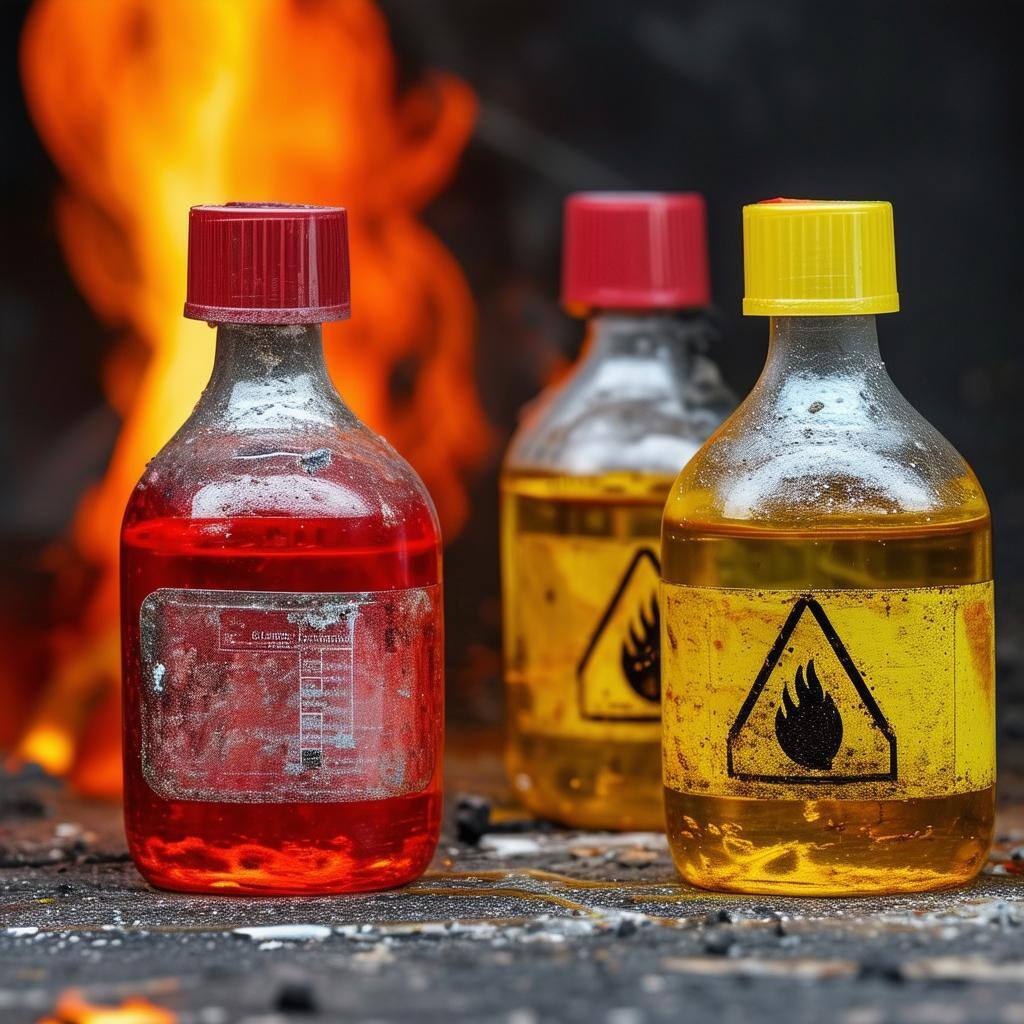
For businesses that handle hazardous materials, managing flammable liquids is uniquely challenging, considering the risk of something tragically going wrong.
The inherent volatility of Class 3 flammable liquids significantly increases the risk of fires, explosions, and related accidents, making it important for businesses that handle these substances to follow strict safety protocols.
Because there are serious risks involved, regulatory bodies in the United States and worldwide have established rules to control the labeling, storage, and transportation of Class 3 flammable liquids.
Understanding how Class 3 flammable liquids impact your operations will help with compliance and ensure the safety of your employees and the community where they work.
Examples Of Class 3 Flammable Liquids
Class 3 flammable liquids are categorized based on their flash point and boiling point, which are key factors in determining the fire risk they pose. A liquid is classified as Class 3 if it has a flash point at or below 60°C (140°F) and a boiling point above 35°C (95°F).
The classification of these liquids is enforced by agencies like the U.S. Department of Transportation (DOT) and the Occupational Safety and Health Administration (OSHA). These organizations establish the criteria to ensure consistency in how flammable liquids are handled, transported, and stored worldwide.
Some common examples of Class 3 flammable liquids include:
- Gasoline
- Ethanol
- Acetone
- Toluene
- Methanol
- Diesel fuel
- Kerosene
These liquids are commonly used in various industries, from transportation to manufacturing, where understanding their properties and adhering to safety protocols is important to preventing accidents and ensuring compliance with regulatory standards.
Safety Measures For Handling Class 3 Flammable Liquids
The volatile nature of Class 3 flammable liquids means that even small mishandling can lead to serious incidents. To ensure safe handling, establishing key protocols is an important step.
Provide Effective PPE
Proper personal protective equipment (PPE) is essential. Workers should wear flame-resistant clothing, chemical-resistant gloves, safety goggles, and face shields to protect against splashes and vapors. Ventilated workspaces are also crucial to avoid the buildup of flammable vapors, which can ignite easily in confined spaces.
The Right Containers Matter
Storage of Class 3 flammable liquids should be in approved containers that are tightly sealed and kept away from sources of ignition, such as open flames, sparks, or static electricity. These containers should be stored in designated flammable liquid storage cabinets that are equipped with proper ventilation and grounding to prevent static discharge.
Transportation Guidelines Prevent Spills
Transportation of these liquids must follow specific guidelines set by regulatory bodies. This includes using appropriate packaging, labeling containers with hazard symbols, and securing them properly to prevent spills during transit. Vehicles transporting flammable liquids should be equipped with fire extinguishers and spill kits to manage any accidents that may occur.
If you are managing hazardous materials more broadly, our article on Disposal Of Hazardous Waste: How To Choose The Right Partner is a great next read to understand how waste disposal partners fit into your compliance strategy.
Be Prepared For Emergencies
Emergency response planning is another critical component. Facilities that handle Class 3 flammable liquids should have a comprehensive emergency response plan in place. This plan should include procedures for spill containment, evacuation, and communication with emergency services. Regular drills should be conducted to ensure that all employees are familiar with these procedures and can respond quickly in the event of an incident.
Training And Education Are Vital
Employees who handle or work near Class 3 flammable liquids should undergo regular training on the hazards associated with these substances and on the correct handling, storage, and emergency response procedures. Keeping safety information accessible and ensuring ongoing education can significantly reduce the risk of accidents.
For training focused on hazardous materials compliance and safety, check out our guide Hazardous Waste Training Options from the Experts.
Best Practices For Transporting Class 3 Flammable Liquids
Transporting Class 3 flammable liquids is a complex process. A lot of steps are taken to ensure the safe transport of flammable substances. That begins with proper packaging. Class 3 flammable liquids should be placed in certified containers that meet regulatory standards, such as those set by the U.S. Department of Transportation (DOT).
Along with labeling, accurate and comprehensive documentation is essential. This includes shipping papers, safety data sheets (SDS), and emergency contact information, all of which should be readily accessible in the event of an emergency.
Vehicle selection and preparation also play a significant role. Vehicles used for transportation must be suitable for carrying hazardous materials and equipped with necessary safety features like fire extinguishers and spill kits. Drivers transporting Class 3 flammable liquids should receive specialized training that covers the specific hazards associated with these substances and proper handling techniques.
Emergency Response For Class 3 Flammable Liquids
A well-prepared and clearly communicated emergency response plan ensures that everyone involved knows how to act swiftly and effectively in the event of an emergency.
Here are some of the areas your emergency response plan should cover:
- Risk assessment
- Spill containment
- Evacuation procedures
- Communication protocols
- Training and drills
Disposal Of Class 3 Flammable Liquids
Unused or expired flammable liquids need to be handled with care. Planning for the disposal of these materials is just as important as their safe handling and storage.
Class 3 flammable liquids are typically disposed of through methods like incineration, fuel blending, or chemical treatment, depending on the specific type of liquid and its chemical properties.
Each of these methods requires specialized equipment and facilities that comply with strict regulatory standards. The law requires that a licensed disposal company with the proper credentials transport your flammable liquid waste to a treatment, storage, and disposal facility (TSDF). When selecting a disposal company for Class 3 flammable liquids, ensure that the company is fully compliant with local, state, and federal regulations.
If you’re also interested in related infrastructure work that often ties into hazardous materials handling, our article on Above Ground Tank Removal: Who You Should Hire? offers helpful, compliance-oriented insights.
By carefully considering how Class 3 flammable liquids are disposed of and selecting a reputable disposal company, your organization can mitigate the risks associated with these hazardous materials, protect the environment, and ensure you remain in full compliance with all relevant regulations.
